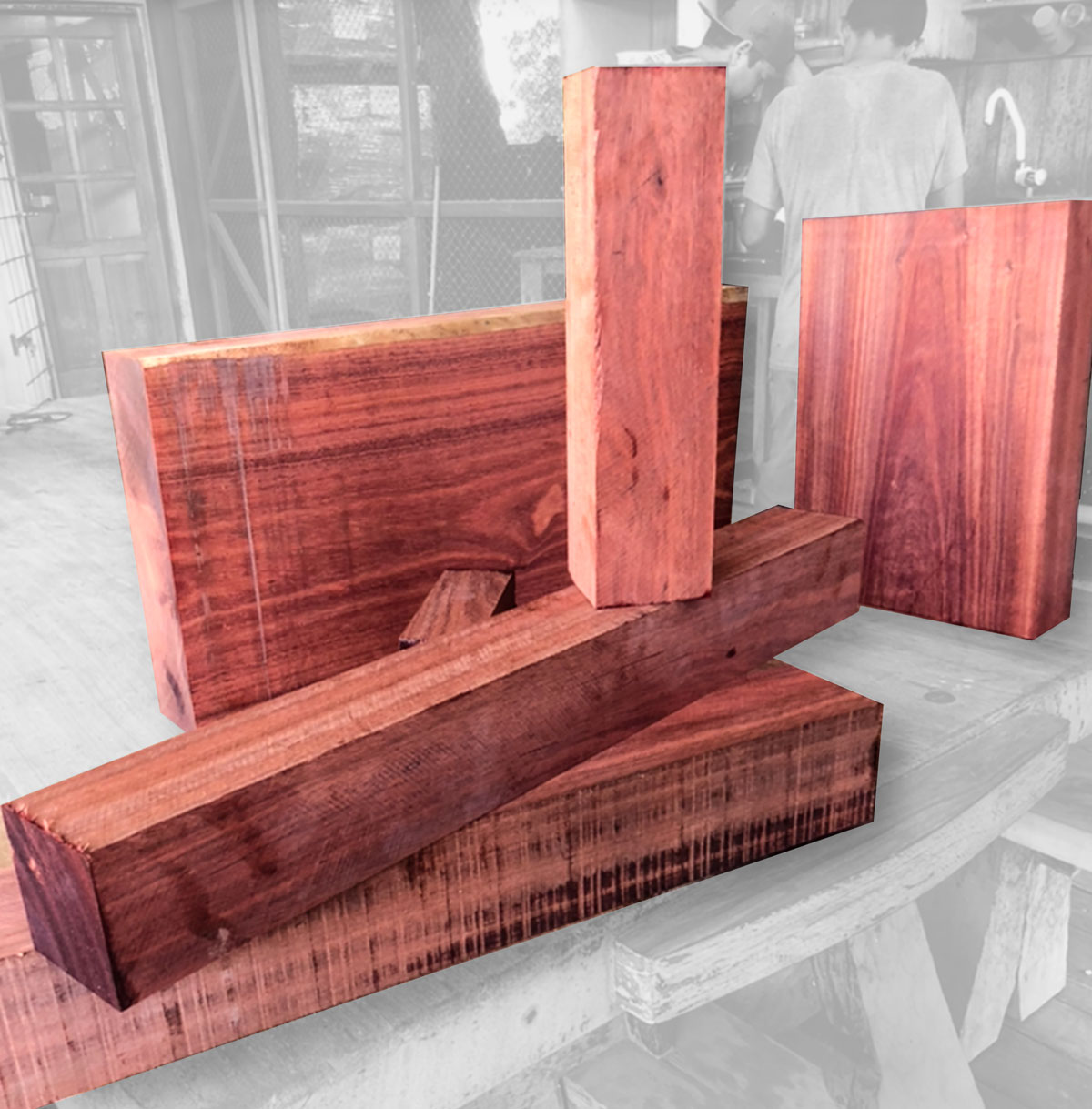
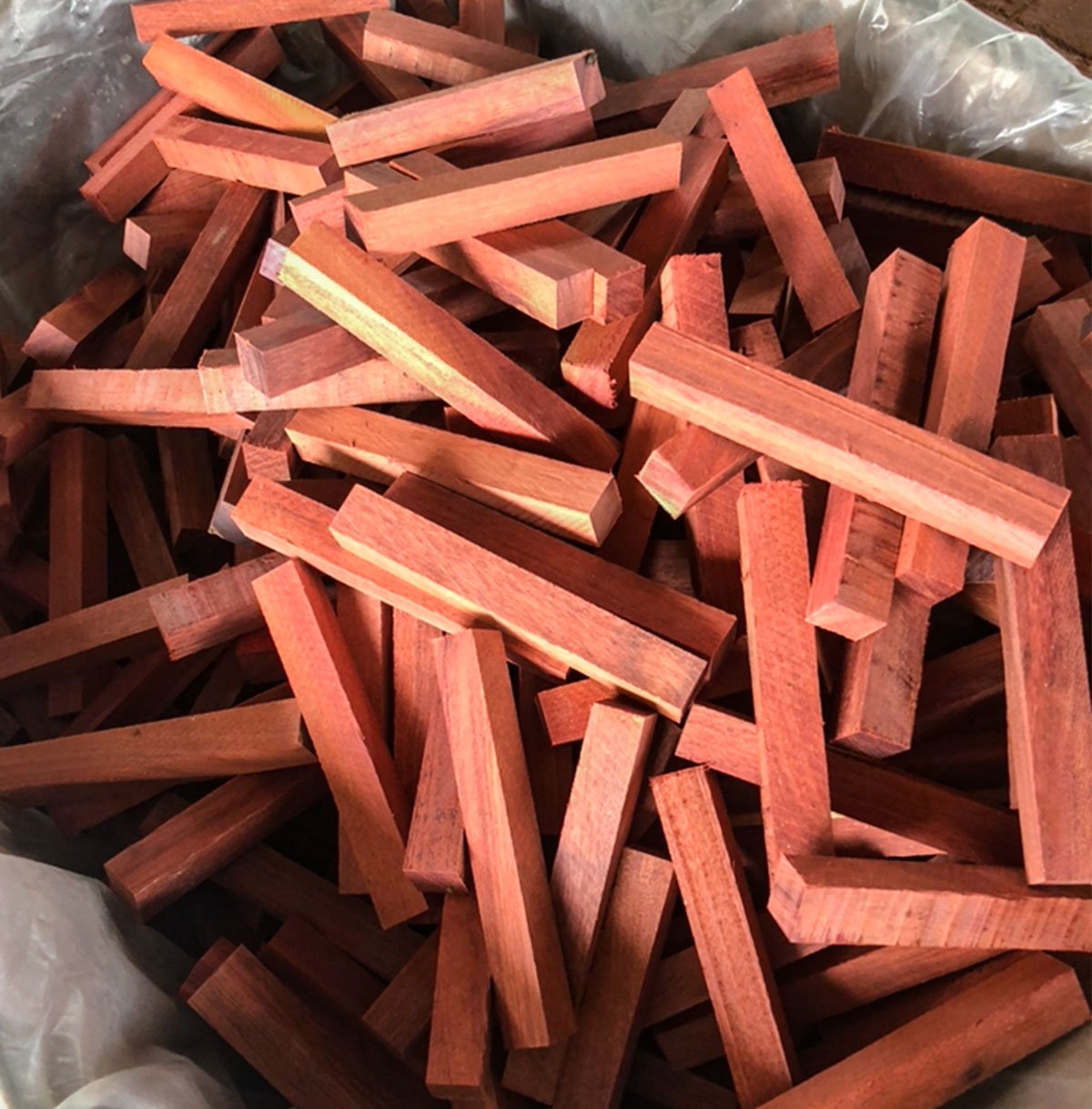
Bloodwood is prized for one thing above all else: color. Its vivid red heartwood, backed by real hardness and decay resistance, makes it a standout choice for inlays, accents, turned objects, and high-end furniture where the material itself is the design statement.
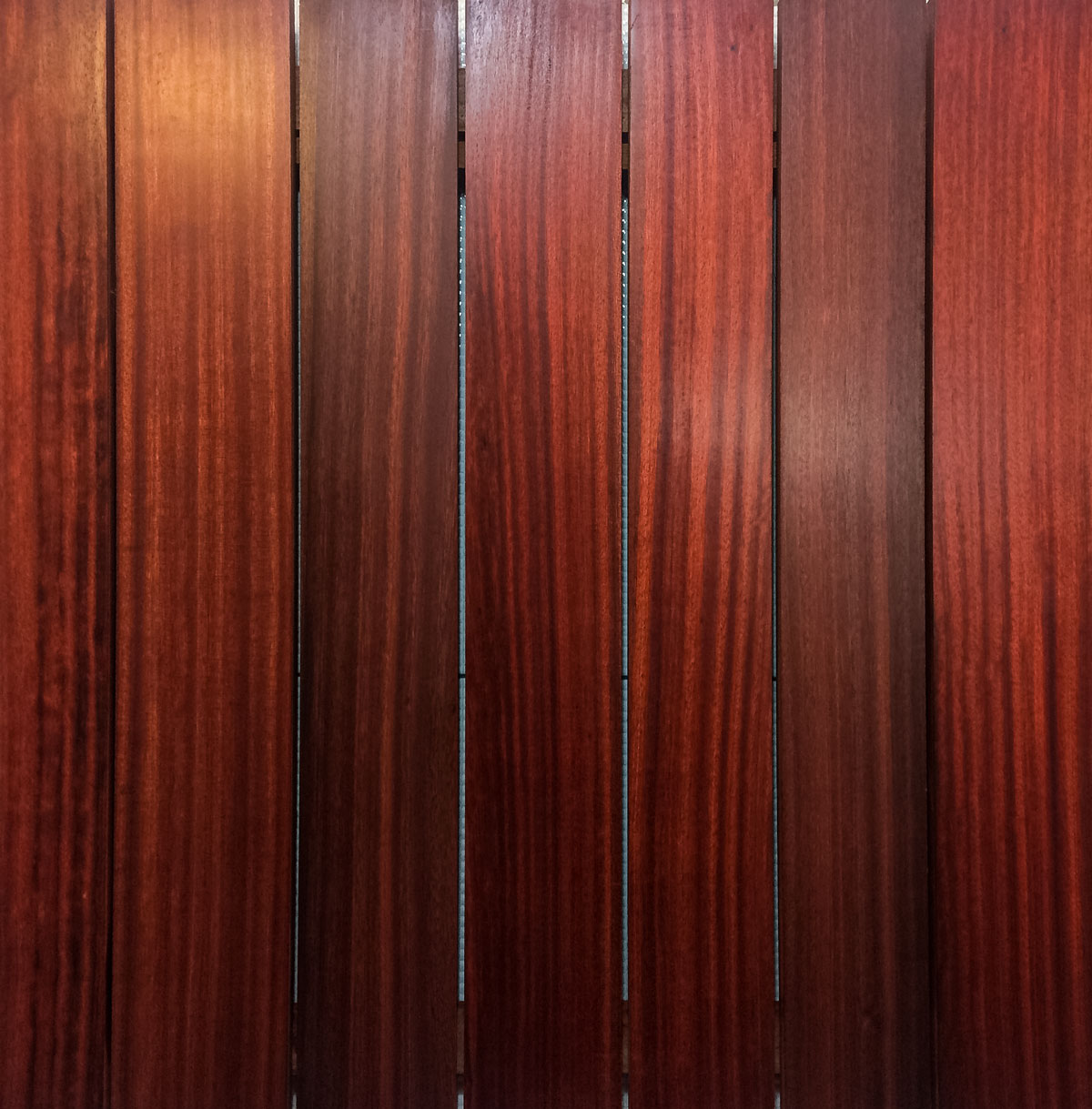
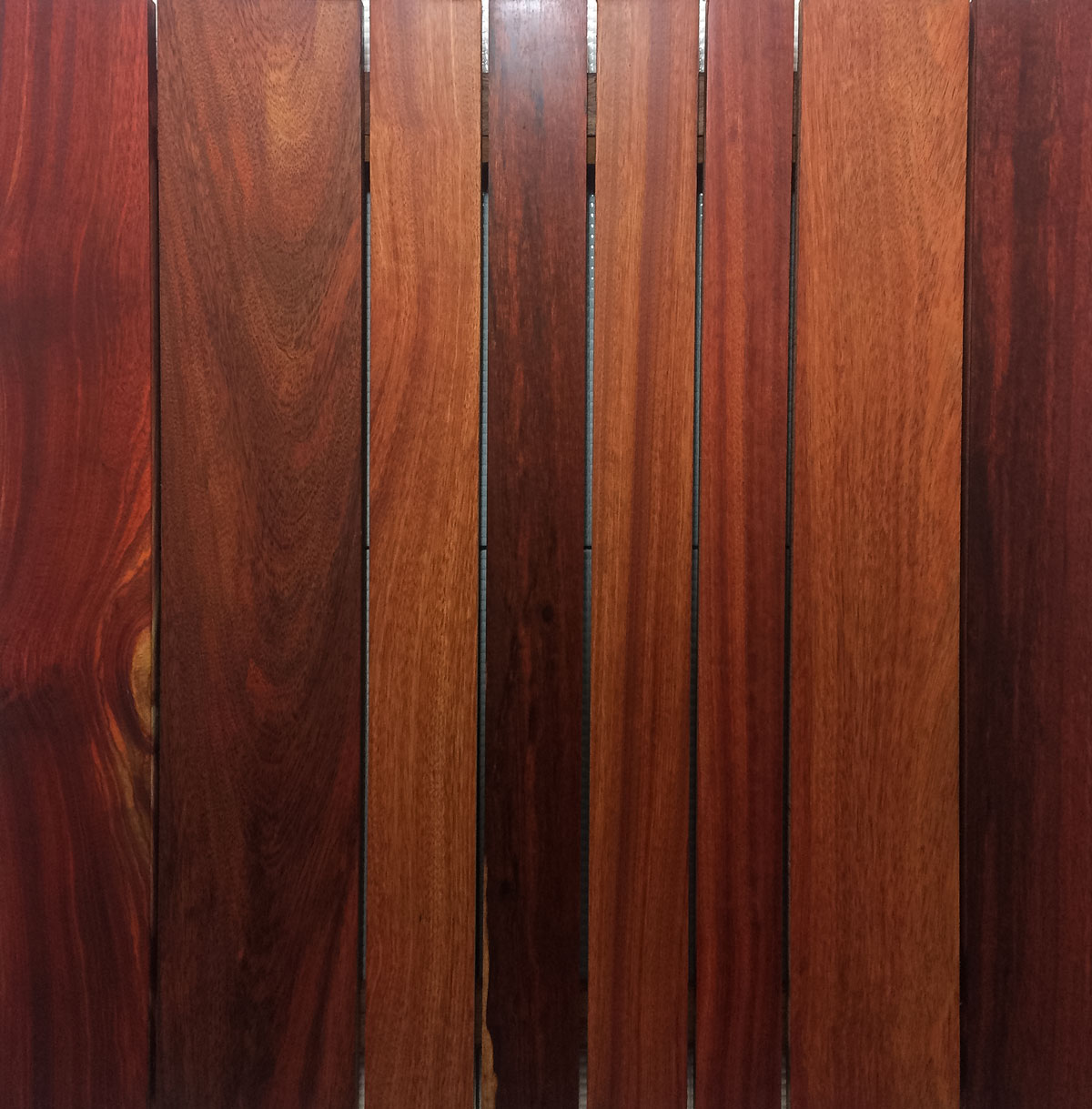
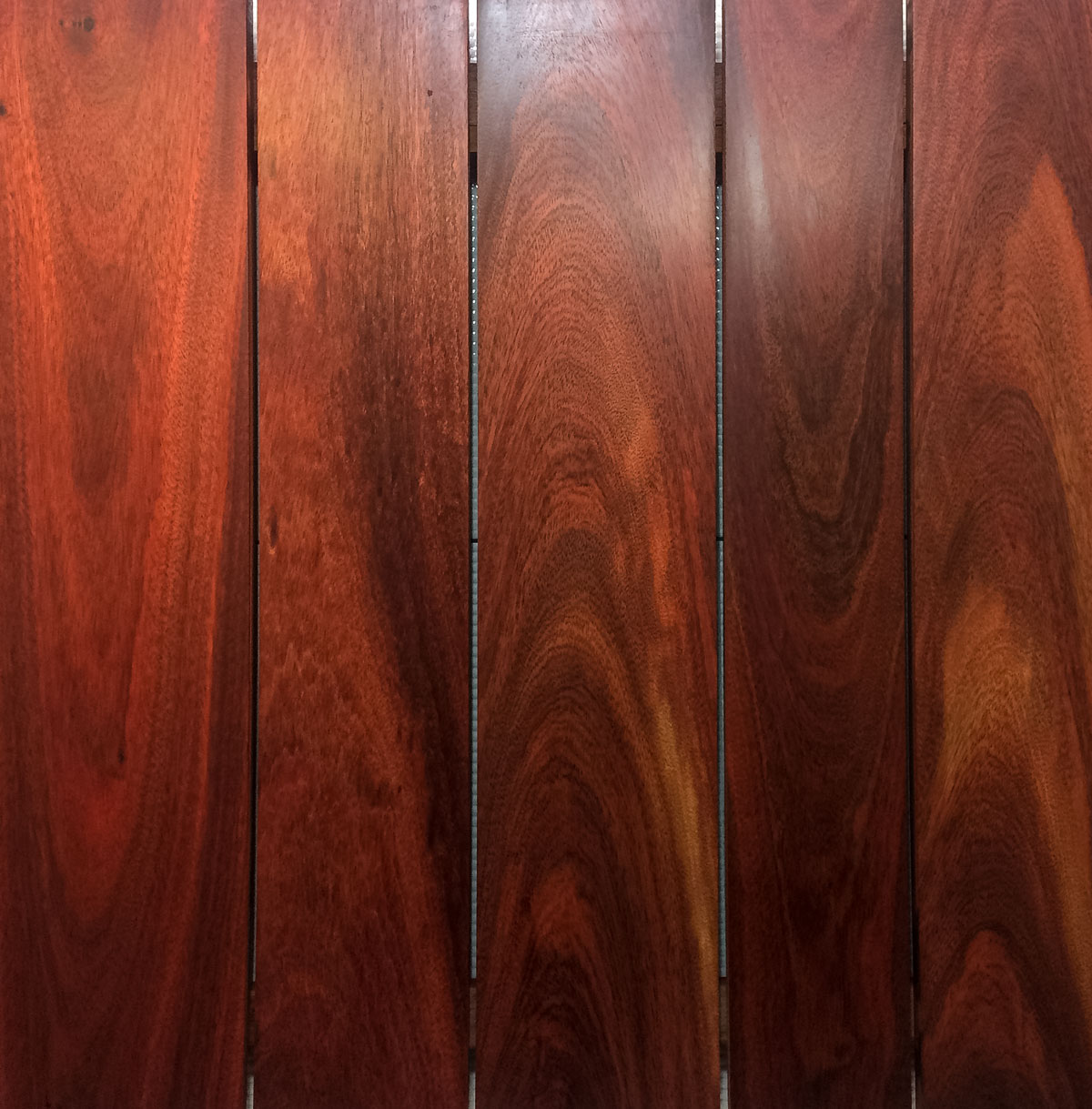
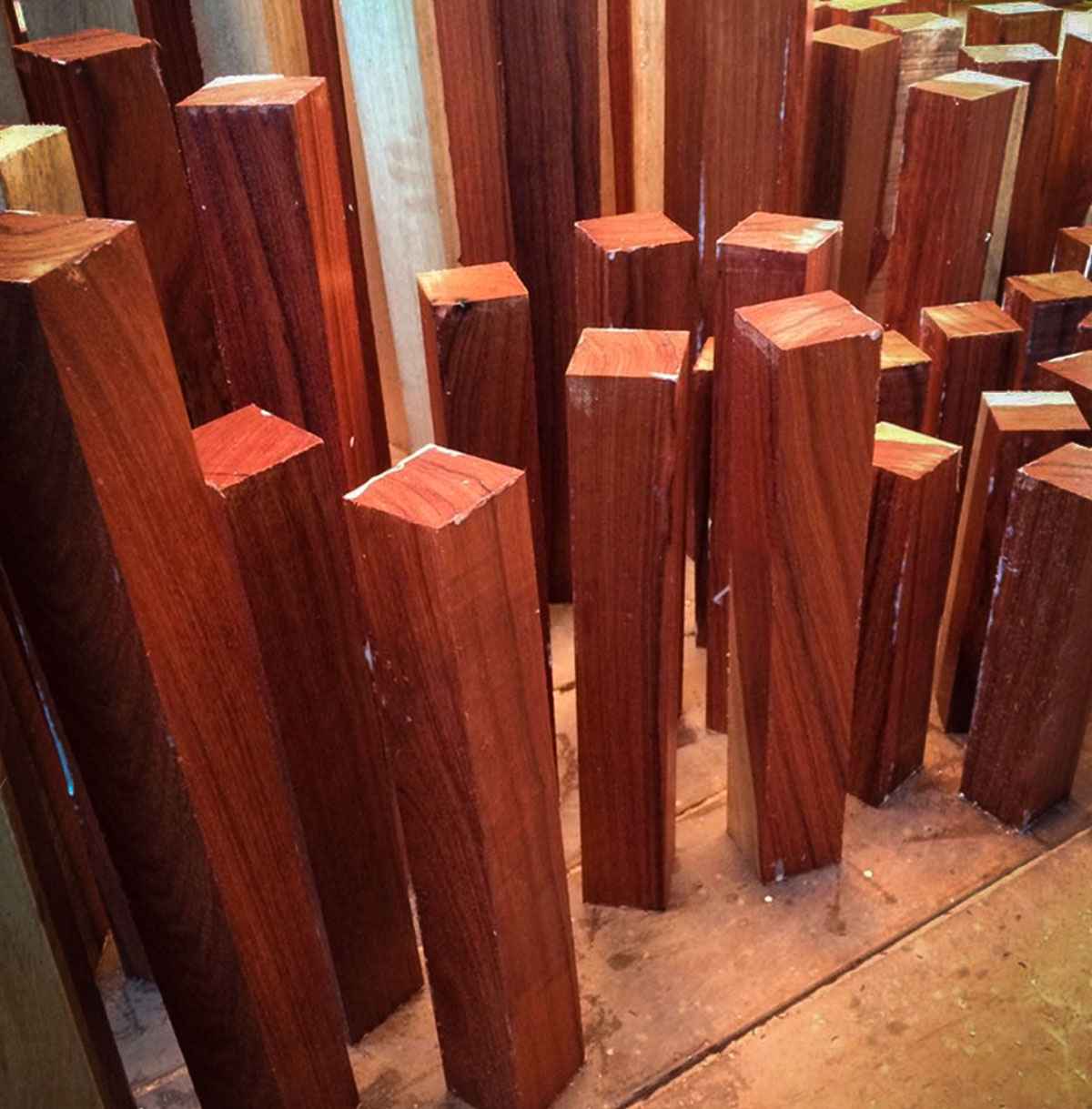
Bloodwood (Brosimum rubescens, also traded as Satiné or Pau Rainha) is native to Brazil, French Guiana, Guyana, and Suriname. Its heartwood is a vivid, saturated red that deepens toward brownish-red with age and light exposure, often with darker veining running through it — one of the most visually distinctive woods in our catalog.
It's dense and genuinely hard to work — it can be brittle and prone to splintering under dull tools, and its dust is a known skin and respiratory irritant, so it calls for sharp carbide tooling, dust control, and some patience. The payoff is a wood that takes an exceptional, lustrous polish and holds its color and durability for decades in furniture, flooring, and fine turned work.
| Botanical Name | Brosimum rubescens (syn. B. paraense) |
|---|---|
| Family | Moraceae (mulberry/fig family) |
| Janka Hardness | 2,900 lbf |
| Specific Gravity | 0.90–1.10 (basic to 12% MC) |
| Average Dried Weight | ~66 lbs/ft³ (1,050 kg/m³) |
| Durability / Decay Resistance | Very durable / Class 2 — highly rot-resistant |
| Insect / Termite Resistance | Durable against dry-wood borers and termites; sapwood more vulnerable than heartwood |
| Workability | Hard and can be brittle; requires carbide or stellite tooling; pre-bore for fasteners; dust is a known irritant |
| Color | Vivid red heartwood, darkening toward brownish-red with age and light exposure, often with darker veining |
| Grain & Texture | Straight to slightly interlocked grain; fine texture with natural luster and chatoyance |
| Origin | Brazil, French Guiana, Guyana, and Suriname |
---
Very durable — Durability Class 2 — among the more rot-resistant species in our catalog, well suited to furniture and flooring that needs to last.
Rated durable against both dry-wood borers and termites, though the paler sapwood is more vulnerable than the heartwood — specify heartwood-only stock for the best resistance.
Its very high density gives it strong natural resistance to ignition and slow flame spread compared to lighter woods, consistent with other dense hardwoods in our catalog, though it hasn't been independently fire-class rated.
2,900 lbf Janka — genuinely hard and can be brittle under dull tooling, prone to splintering. Requires carbide-tipped or stellite blades and pre-boring for fasteners; the wood dust is a known skin and respiratory irritant, so cutting it calls for good dust control.
Common Applications
Its saturated, stable red color is genuinely rare in wood and doesn't require dye or stain, and it's harder to source and mill than most species — the combination of color, hardness, and decay resistance is why it commands a premium, particularly for inlay and accent work.
Its dust is a known skin and respiratory irritant for some woodworkers, so we recommend good dust collection and a respirator when machining or sanding it, the same precaution we'd suggest for any dense tropical hardwood dust.
The vivid red deepens toward a brownish-red with age and UV exposure rather than fading to gray the way some woods do — a clear topcoat with UV inhibitors slows that shift if you want to hold the brighter red longer.
High-end furniture, veneers, flooring, paneling, tool handles, carvings and inlays, turned objects, and musical instruments — almost always where its color and polish are the point.
Bloodwood from Rare Earth Hardwoods is sourced through our own Zero Impact Brazil facility, harvested sustainably and ethically, in compliance with all applicable regulatory agencies — the same accountable supply chain behind every species in our catalog.
Tell us your dimensions, grade, and volume — wholesale, commercial, or retail — and we'll confirm current availability.
Inquire About Your Project →We’re in the process of redeveloping our website for our slate of new offerings.
In the meantime, please send us a message or give us a call.
We’re particularly interested in your wholesale or commercial quantity inquiries.